Local guide
Angkor Temples Guide: Which Ones, In What Order, How Many Days
Which Angkor temples are worth your time, the order to see them without burning out, how many days you need, and the $5 sunset boat near Bakheng.
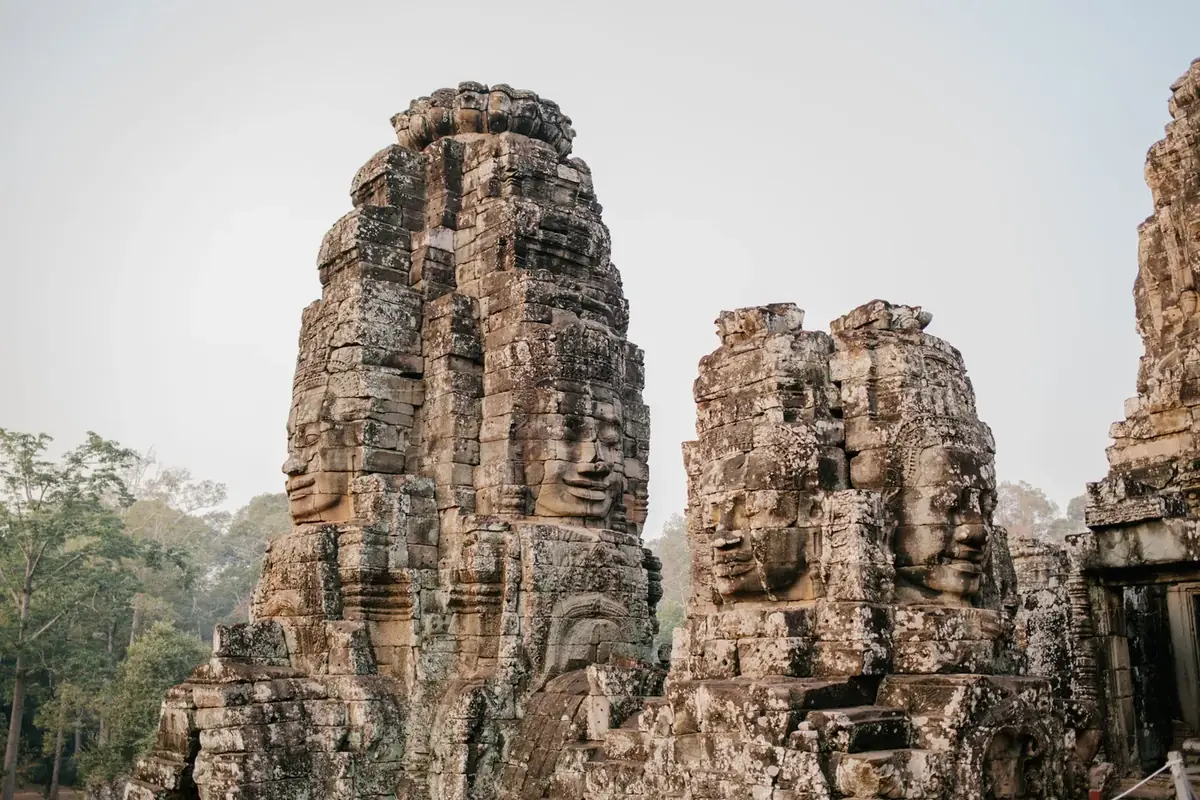
The most common mistake I see people make at Angkor is trying to see all of it.
There are hundreds of temples out there, and the itineraries you find online will happily march you through fifteen in a day. By the fourth or fifth one you stop seeing them. There is a name for it among people who work here, temple fatigue, and it catches almost everyone. Your legs go and the stones blur together.
So this guide is not a list of forty temples. It is the ones worth your time, the order I would see them in, and how many days it takes. I would rather you stood in four temples and noticed the small things than speed-walked through twelve.
Quick answer, July 2026:
- The big four for a first day: Angkor Wat, the Bayon, Angkor Thom, Ta Prohm.
- One day does those four unrushed. Two days reaches quieter sites like Beng Mealea. Three days for far-out Banteay Srei or Phnom Kulen.
- Sunrise light starts around 5am, so leave town near 4:30am.
- Cover shoulders and knees. A scarf works on the grounds, but not to climb the top of Angkor Wat.
- Skip the Phnom Bakheng sunset scrum. Take a $5 sunset boat instead.
The temples worth your time
Four temples carry a first visit, and a fifth is worth saving for a later day. Here is what each one is and when it is at its best.
| Temple | Best time | Why it is here | My verdict |
|---|---|---|---|
| Angkor Wat | Sunrise, then leave early | The big one, and the one everyone crowds at dawn | Go, but move on before the crowd settles in |
| The Bayon | Afternoon | The face towers, best in afternoon light | Do not miss it, and look for the small things |
| Angkor Thom | Late morning | A whole walled city, not one temple | Give it more time than people expect |
| Ta Prohm | Off-peak hours | The tree-root temple from the films | Worth it, timing is everything |
| Banteay Srei | Day 2 or 3 | The finest carving at Angkor, but 37km out | Skip on a rushed first day |
Angkor Wat
If you are doing sunrise, this is where you start, and then you leave earlier than you want to. The crowd at Angkor Wat builds fast after the sun is up, and the trick is to be walking into the temple while everyone else is still standing at the reflection pond taking the same photo. If you are not doing sunrise, there is no rush, and you can take it at a slower hour.
The Bayon
The Bayon is the one with the faces, all those huge stone heads looking down at you from the towers, and the light is best on them in the afternoon. This is the temple where slowing down pays off. There is a well tucked away inside that most first-timers walk straight past. I was told servants once drew water from it for the king, and it still gives off a strange oily, almost perfumed smell that I have never been able to place.
Angkor Thom
People think Angkor Thom is a temple. It is a whole walled city, and the Bayon sits at the center of it. Come in through the south gate with its row of stone faces, and inside there is more than one stop worth making, the Baphuon, the Terrace of the Elephants, the Terrace of the Leper King. Most tours give the whole city twenty minutes because they have already spent the morning elsewhere. Give it more.
Ta Prohm
This is the tree-root temple, the one from the Tomb Raider film, where the roots pour over the walls like the jungle is swallowing the stone. It gets mobbed. But in the right season and at the right hour it thins right out, and you can get the famous corners without a queue for the photo. Getting there at a quiet time is the whole game.
Banteay Srei
Banteay Srei has the best carving at Angkor, cut into a pink sandstone that holds detail the bigger temples cannot. It is also about 37km out of town. For a first-timer on a packed day, I would leave it. It belongs on a second or third day when the drive out is part of the pleasure and not a thing you are racing against the clock.
The order I would run it
The route matters as much as the temples, because the whole day is about staying ahead of the crowd instead of walking into it.
If you want sunrise, you start at Angkor Wat and you move on early, while the light is still soft and before the crowd settles. From there the Bayon and the rest of Angkor Thom, then Ta Prohm. One loop, no doubling back. If you skip sunrise, the pressure comes off and you can take Angkor Wat at a gentler hour, but the principle holds: go around once, in order, so you are never fighting your way back through a group you already passed.
For the timing hour by hour, most itineraries online have the basics right, and I will not pretend our clock is a secret. What we do differently is refuse to cram. One temple per hour or so, not four, so there is time to notice the well at the Bayon and the carvings at Angkor Thom instead of ticking them off.
If the tickets themselves are confusing you, we wrote a full Angkor Wat tickets guide, and if you are staying in town and wondering about the logistics of the first morning, how to visit Angkor Wat from Siem Reap covers the pickup and the gate.
How many days you need
You can see the headline temples in a day. Whether you should is a different question.
| Days | What you get | Good for |
|---|---|---|
| 1 day | Angkor Wat, the Bayon, Angkor Thom, Ta Prohm | Short trips, first-timers who want the icons |
| 2 days | The above, slower, plus quieter sites like Beng Mealea | Anyone who does not want to rush the first day |
| 3 days | Adds far-out Banteay Srei or Phnom Kulen | Anyone with time for the far-out sites too |
One day is enough for the big four if you keep a steady pace. Two days is where it gets good, because you can breathe on the first day and then head out to somewhere like Beng Mealea, which is further out, much quieter, and greener, the jungle taking a temple back with almost nobody watching. Three days is for adding the far ones, Banteay Srei or a trip up Phnom Kulen, that do not fit a first day without wrecking it.
If you already know you want more than a day, our two-day and three-day tours are built around exactly this, the icons first, then the quiet ones.
Sunset, and why I skip Phnom Bakheng
Everyone gets sent up Phnom Bakheng for sunset. It is a hill temple with a view, and they cap how many people they let up top, so you queue, you get herded, and you watch the sun go down shoulder to shoulder with a few hundred other people.
There is a better way to end the day. Small sunset boats run near Bakheng and southwest of the Bayon, around $5 a person, and the light coming off the water is worth more than the crowded hilltop. It is quiet, and you are sitting down instead of jostling for a spot.
What to wear
The dress rule is simple and it is enforced. Cover your shoulders and your knees, and leave the short shorts at the hotel.
On the general temple grounds a krama, our Cambodian checked scarf, does the job, and if you turn up in shorts the guards will usually point you to a stall selling a cheap one to wrap up in. But there is a catch worth knowing: to climb the Bakan, the top level of Angkor Wat, a scarf is not accepted. Up there they want your shoulders and knees properly covered, so a thin layer you can throw on beats getting turned back at the stairs after queuing for them.
The day, plainly
A few practical things nobody tells you until you are out there.
- Pickup is around 4:30am for sunrise, later if you skip it.
- Figure about an hour at each temple. That is the anti-fatigue pace, not a rush.
- Clean toilets are along the road toward Angkor Thom and near Bakheng. Use them when you pass, not when you are desperate.
- Coffee is easiest on the way out from Siem Reap toward Angkor Wat, before you are inside the park.
- Lunch is either back at the edge of town or at the stalls right by the temples. Some of the temple-side spots overcharge and locals give them a miss, so a small stall is usually the better call. Your guide will steer you off the rip-offs.
See it with someone who knows the timing
You can do all of this on your own with a tuk-tuk and a pass. Plenty of people do.
But the difference between a good Angkor day and a tiring one is almost entirely timing, being at Ta Prohm when it is empty and out of Angkor Wat before the crowd lands. That is what our private Angkor Wat temple tour is for. Sitha Roet, our Ministry-certified guide, has run this loop for over ten years and knows which corner is quiet at which hour. You pay him directly, and he takes one group at a time.