Local guide
Kulen Mountain from Siem Reap: Waterfall, Lingas and Logistics
The $20 ticket, the 11:30am road cutoff, the waterfall swim, and who should pick Kulen over Banteay Srei or Beng Mealea. Written by a local guide.
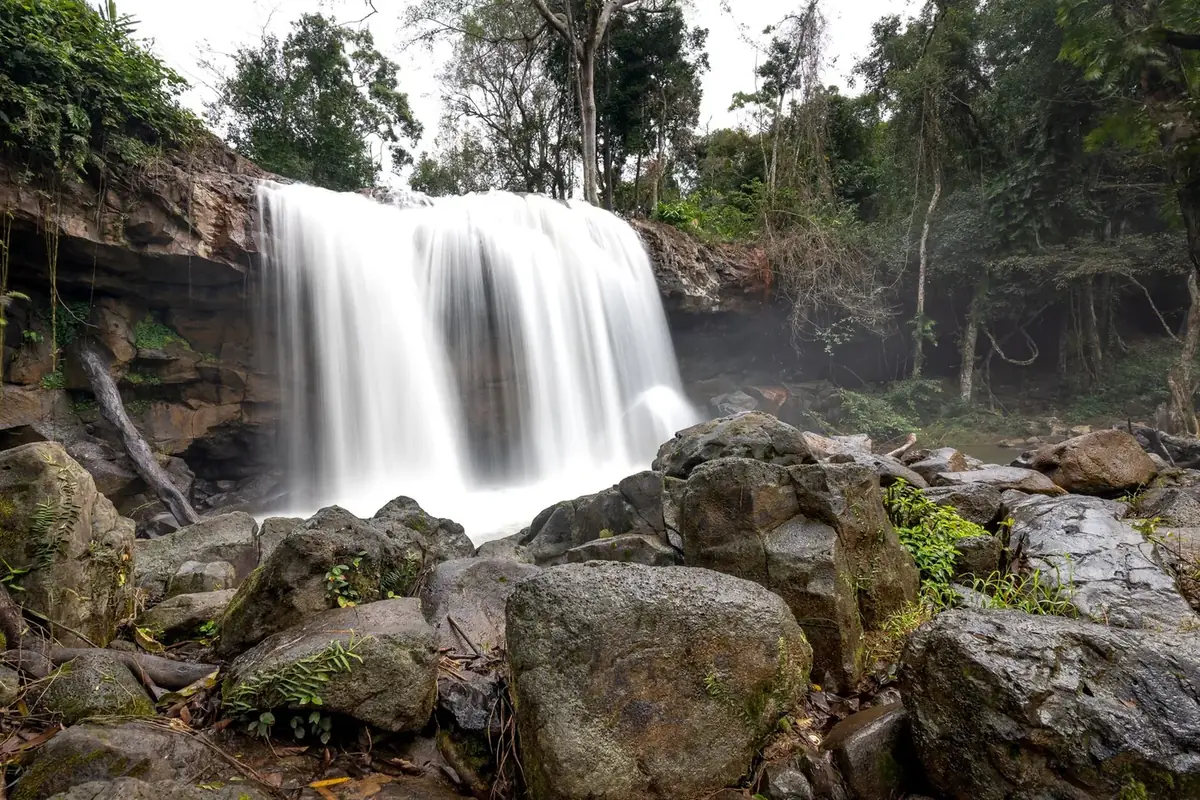
Guests ask me whether Kulen Mountain is worth it, since the ticket is $20 on its own and the Angkor pass does not cover it. My answer is yes, if you go in the morning and treat it as a swim-and-picnic day on a sacred mountain rather than one more temple stop. Go too late and you will meet the road rule that ends the plan before it starts. More on that below.
Quick facts, July 2026:
- Entrance is $20 per person, bought at the ticket office in town or at the checkpoint on the way. The Angkor pass is not valid here.
- About 50 minutes from Siem Reap to the checkpoint, then 30 minutes up the mountain road.
- Vehicles are allowed up until about 11:30am only. Leave your hotel by 8.
- You can swim under the waterfall. Private changing rooms cost $1.
Kulen takes a full day, so it competes directly with your temple time. If you are still deciding how many days the temples deserve, start with our full Angkor temples guide and come back once the far-out day is confirmed.
What is up on the mountain
Phnom Kulen, or Mount Kulen, is where the Khmer Empire began. In 802 AD Jayavarman II declared himself god-king on this mountain, before anything at Angkor existed. For Cambodians it is a sacred place first and a sight second. On weekends the paths fill with local families who come up to pray and picnic, and you will hear far more Khmer than English.
Three stops make up the day. Preah Ang Thom is the giant reclining Buddha, carved into the summit rock in the 16th century and still an active shrine, so cover shoulders and knees for the climb up. Then comes the River of a Thousand Lingas, a riverbed carved with rows of lingas, the symbol of Shiva and of divine creation. The water flowing over the carvings is considered sacred, and the old belief is that it blessed the land, the people and the Khmer kingdom downstream. That same water still feeds the rice fields below the mountain, which is the reason the carvings were put in the river at all.
The third stop is the waterfall, a drop of about 20 metres into a pool of clean, cold water. This is where the day slows down.
The road, and why morning is the whole plan
Leave your hotel at 8:00, after breakfast. It takes about 50 minutes to reach the Kulen checkpoint, then another 30 minutes up the mountain road, so you are at the waterfall by about 9:30 while the day is still cool.
The later part of the drive is the prettiest, with potato and cashew plantations along the road. There is a pagoda out that way my family goes to a few times a year. It is not a stop on the tour, but it should tell you the drive is not dead time between town and the waterfall.
Here is the rule that catches people out: from about 11:30am, vehicles are no longer allowed to drive up. Turn up at the checkpoint at noon and your Kulen day is over. This is why every sensible Kulen plan is a morning plan.
Weekends are when Cambodian families come up in numbers, so the mountain is busier then, but also at its liveliest. Khmer New Year and the other big festivals are the busiest of all, because that is when families make the trip. If you want the waterfall close to yourself, pick a weekday morning.
Tickets, and what the Angkor pass does not cover
Kulen is run by a different authority than Angkor, so your Angkor pass means nothing at the checkpoint here. The Kulen ticket is $20 per person, and you can buy it in two places: the ticket office in Siem Reap, or the checkpoint booth on the way up. On our tours we sort it en route and it takes a few minutes.
If the Angkor side of your trip is still unplanned, the pass prices and the places to buy are in our Angkor Wat tickets guide.
The swim
The pool under the falls has clean water and you should get in. Bring your swimsuit, and either wear it under your clothes or use the private changing rooms near the falls for $1. In the wet season the falls come down with real force, which is when they are best to look at and worst to stand under. I tried standing under them once. It hurts. Swim in the pool, leave the falls themselves alone.
Footwear matters more here than at the temples. Comfortable hiking or trail shoes with good grip are the best choice, because the paths and the rock near the water are smooth and wet. Sandals that stay on your feet are the acceptable second option.
Lunch, on the mountain or on the way down
Plan on several hours up top. The huts near the waterfall belong to the simple restaurants there, and the local system is to buy a few things from the restaurant so you can settle into a hut, then unpack the food you brought yourself. Everything on the mountain costs one and a half to two times the town price, as you would expect somewhere everything gets carried up to.
When my family goes, we bring grilled chicken, eggs, beef and pork skewers, and our own water and drinks. I know, we are a bit stingy. It keeps the day cheap. If you order instead, it will be some kind of grilled chicken or fish, they do it everywhere on the mountain, and it runs around $10. On our tour we usually bring lunch up and eat near the falls. The other option is to drive down and stop at one of the mid-range restaurants near Banteay Srei temple, which sits on the road back to town.
One far-out day: Kulen, Banteay Srei or Beng Mealea
Most Siem Reap itineraries have room for one long-drive day outside the main park, and these three are the usual candidates. They suit different people.
| Who you are | Pick | Why |
|---|---|---|
| Family with kids | Kulen Mountain | Waterfall, river, the giant reclining Buddha, places to swim and picnic. An adventure day that keeps children engaged instead of another long temple walk. |
| Photographer | Beng Mealea | A jungle temple left half-collapsed: fallen stones, tree roots, soft light through the canopy, few crowds. |
| Carving and history people | Banteay Srei | The finest sandstone carving in the Angkor region. A small temple where the detail on every wall repays a slow look. |
If you can spare two far-out days, Kulen and Banteay Srei pair well, since Banteay Srei sits on the Kulen road. That is the same geography behind the lunch suggestion above.
Book the day
If you want this handled properly, with pickup at 8, tickets sorted on the way and lunch by the falls, that is what our Kulen Mountain tour is: $125 solo by private car, $195 by private A/C SUV for up to four guests, or $240 by minivan for five to six, for the whole group. The $20 entrance ticket per person is separate.