Local guide
How to Visit Angkor Wat From Siem Reap
How to visit Angkor Wat from Siem Reap: the distance, every way to get there, the pass, when to go, and how to see it without the crowds.
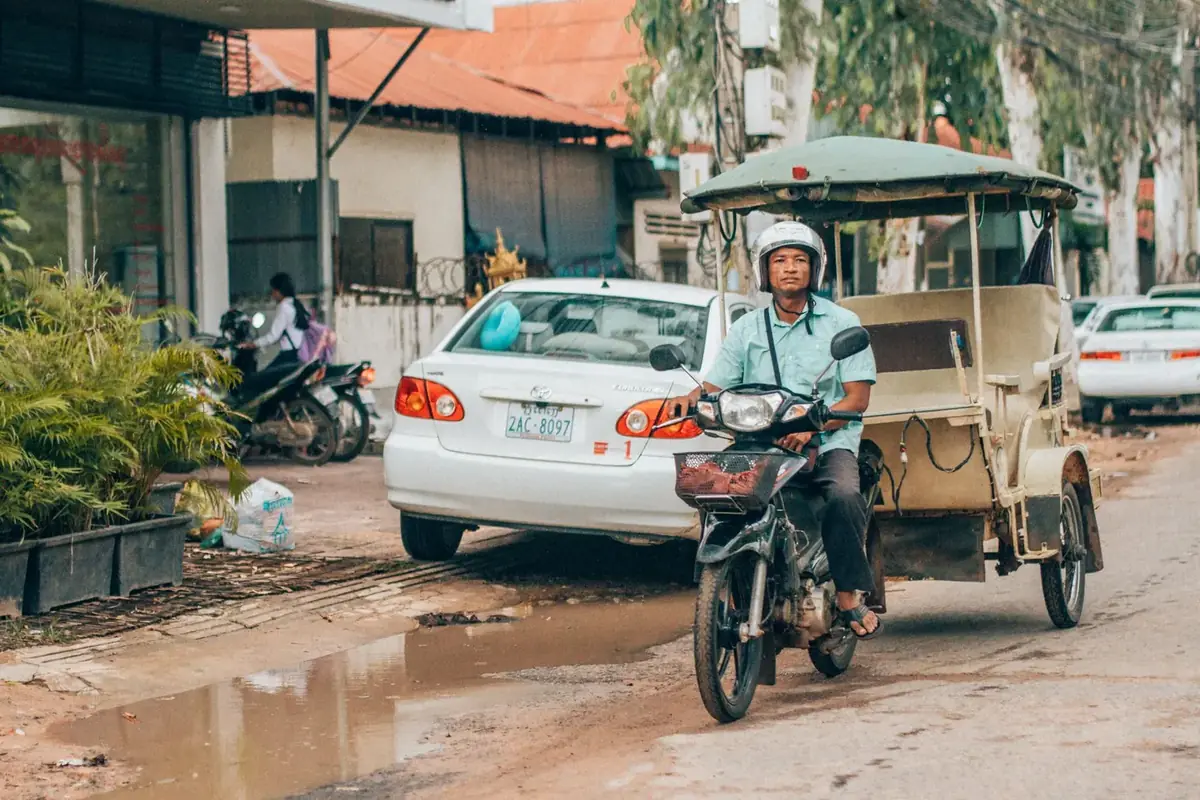
Visiting Angkor Wat from Siem Reap is easier than most first-timers expect. The temple sits 6km from town. What trips people up is not the distance, it is the ticket system and the timing, and those are the two things I watch visitors get wrong most days.
How far is Angkor Wat from Siem Reap?
About 6km north of town. Twenty minutes in a tuk-tuk, fifteen by car. But Angkor is not one temple, it is a park bigger than some towns, and once you are inside you spend more time moving between temples than you spent getting there from Siem Reap.
Here is what that actually looks like once you are in the park, measured from town:
| Where | Distance from Siem Reap | Rough time by tuk-tuk |
|---|---|---|
| Angkor Wat | 6 km | 20 min |
| Angkor Thom & the Bayon | 8 km | 25 min |
| Ta Prohm | 9 km | 25–30 min |
| Phnom Bakheng (sunset) | 6.5 km | 20 min |
| Banteay Srei | 32 km | about 1 hour |
| Beng Mealea | 65 km | 1.5–2 hours |
The first four sit close together, so a first day is less about distance and more about the order you hit them. The far two are their own trip, and that is where a car earns its money over a tuk-tuk. Plan for the moving around inside the park, not the getting there.
The road out to the temples is an easy one. Most of the day it is quiet and the 6km go fast. It fills up in the late afternoon, when people here finish work and head home, on weekend afternoons, and sometimes around noon. It never gets bad, but if your run out or back lands in one of those windows, give yourself a few extra minutes.
How to get to Angkor Wat from Siem Reap
Start with the apps. They save you haggling a price at the roadside every time you want to move. Cambodia has its own ride-hailing now: PassApp, Grab, TADA, and a newer one called WowNow. Uber is not one of them, it left this part of the world years ago, so if you have it on your phone out of habit, it will not open a single car here.
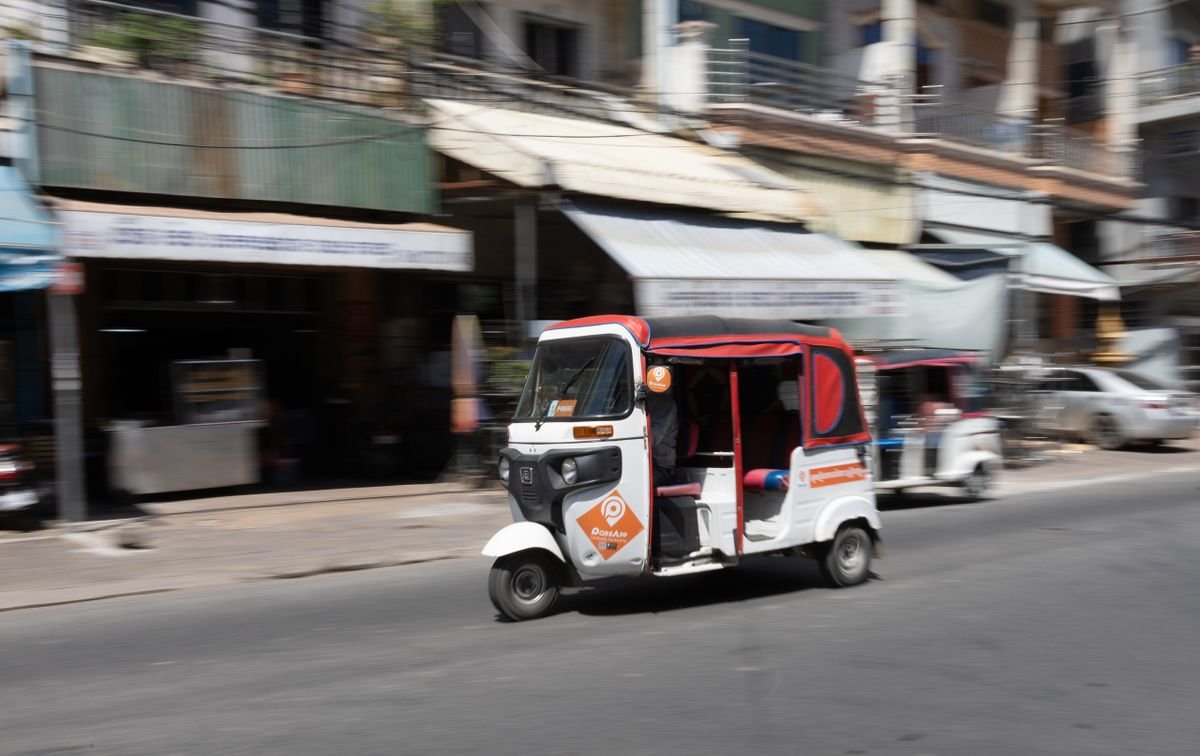
PassApp is the cheap one. Those are the little enclosed three-wheelers you will notice around town, closer to an auto-rickshaw you might see in India than to the big carriage tuk-tuks parked outside the temples. On PassApp a rickshaw runs about 1,000 riel a kilometre, which is about $0.25, and a car or SUV is roughly double that. You watch the fare before you agree to it, so there is no negotiation and no tourist markup. For getting from your guesthouse to the ticket office, or back into town for lunch, it is cheaper and calmer than arguing a price on the street.
The apps are point to point, though, and a temple day is not point to point. You want one driver who waits for you at each temple while you are inside, not a new ride every time you come out. For that you hire a driver for the whole day:
- Tuk-tuk for the day. The classic ride, and what I would pick in the cool months. This is the remork, the open carriage pulled by a motorbike, and it handles the close cluster of temples easily. The catch is heat and distance: midday sun with no A/C is real, and I would not take it all the way to Banteay Srei and back.
- Air-conditioned car with a driver. The call in the hot season, with kids, with anyone who wilts in heat, or on any day that reaches for Banteay Srei or Beng Mealea. You trade the open air for somewhere cool to sit between temples.
Cycling, if you are fit and up early. You can rent bicycles in town and closer to the temples, from a few dollars for a basic one up to about $8 a day for a proper mountain or road bike. The park is built for it, with bike lanes on the main roads and a marked route that runs from Angkor Wat out through the nearer temples. It is flat. What it is not is a hot-afternoon plan or a way to reach the far sites, so start at dawn and carry more water than you think you need.
Motorbikes are a town thing, not a temple thing. You can rent one from about $12 a day, but you cannot ride it into the Angkor park: foreigners are not allowed to self-drive inside, and they enforce it at the checkpoints. If you want a motorbike in the park it has to be with a Cambodian driver. For a temple day, take a tuk-tuk or a car.
If you would rather not sort any of this out, a tour with us has the transport in the price, and your money goes straight to your guide and driver, with 5% of the booking set aside for village schools and clean water.
Getting the Angkor pass
One thing to know before anything else: the Angkor pass is a government ticket with a fixed price, the same for everyone, so anyone offering you a discount is selling you a problem. No tour includes it in the price, and no third party sells a legitimate one.
You buy it yourself through the official channels: the Angkor Enterprise website, the Angkor-Pass app, the kiosk at Heritage Walk, or the ticket office on the road to the temples. Bring your passport, they take your photo, and you pick 1, 3 or 7 days. The office opens early, around 5am, so you can buy your pass on the way out to a sunrise without it costing you the light. Keep the pass on you, because staff check it at each temple and at the checkpoints inside the park. I wrote a full guide to Angkor Wat tickets with the current prices and the mistakes that cost people money.
When to go to avoid the crowds
Sunrise and late afternoon, for the light and for the space. Midday at Angkor Wat is seriously hot, there is almost no shade between the temples, and that is also when the biggest groups are thickest.
Those groups move on a schedule, and guides here know it by heart, so a good local plans your day backwards from where everyone will be. Sunrise tours put almost everyone at Angkor Wat itself first thing in the morning, so we start at Angkor Thom while it is still quiet and run the standard route in reverse. Which temples are worth your time and the order to run them is laid out in our Angkor temples guide.
Can you see Angkor Wat in a day?
Yes, and most first-timers do. One full day gets you Angkor Wat for sunrise, Angkor Thom and the Bayon, and Ta Prohm, at a pace that is busy but not a march. If you have a second or third day you slow down, add the temples further out, and stop watching the clock. If you have anything left at the end of a day, sunset from Phnom Bakheng or out on a boat is an easy add.
Want it done for you? Look at our Private Angkor Wat Tour for a full temple day, or start before the light with the Private Sunrise Tour.
The easy way
If you would rather not piece any of this together, meet your guide and let a certified local sort the pass, the transport and the timing while you just look at temples.