Local guide
The Best Time to Visit Siem Reap, From Someone Who Lives Here
When to visit Siem Reap, from someone who guides here year round: the real weather, the crowds, Angkor sunrise by season, and the months I actually tell friends to book.
Ask a guidebook when to come to Siem Reap and it says November to February, every time. If a friend messaged me asking the same thing, I would tell them May or June.
I live here and I guide here through all of it, the dry months and the wet ones, so let me walk you through what each season actually feels like on the ground, and where I would put your trip if you have the choice.
There is no bad month to come to Siem Reap. Every season here trades one thing for another, and none of the trades are dealbreakers. So if your dates are already fixed, stop worrying. You will be fine whenever you land.
The wet season, June to October: green, and better than it sounds
This is the season people are scared of, and they have it backwards.
The rain does not sit on you all day. It usually comes in a burst of an hour or two, most often in the afternoon, and then it is done. After a big downpour the next day tends to be clear and pleasant. Humid, yes, this is the tropics. But the picture in your head of a grey week trapped indoors is not what happens. This is not the Forrest Gump kind of rain that keeps going for two or three days straight.
The genuinely annoying kind of rain is the other one: a moody, overcast day where it drizzles on and off for most of the afternoon. The light goes dull and grey. But those days are rare, and they pass.
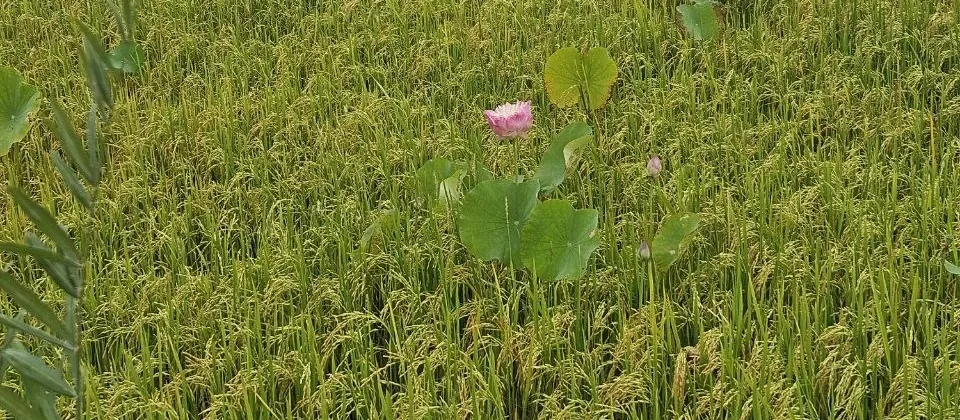
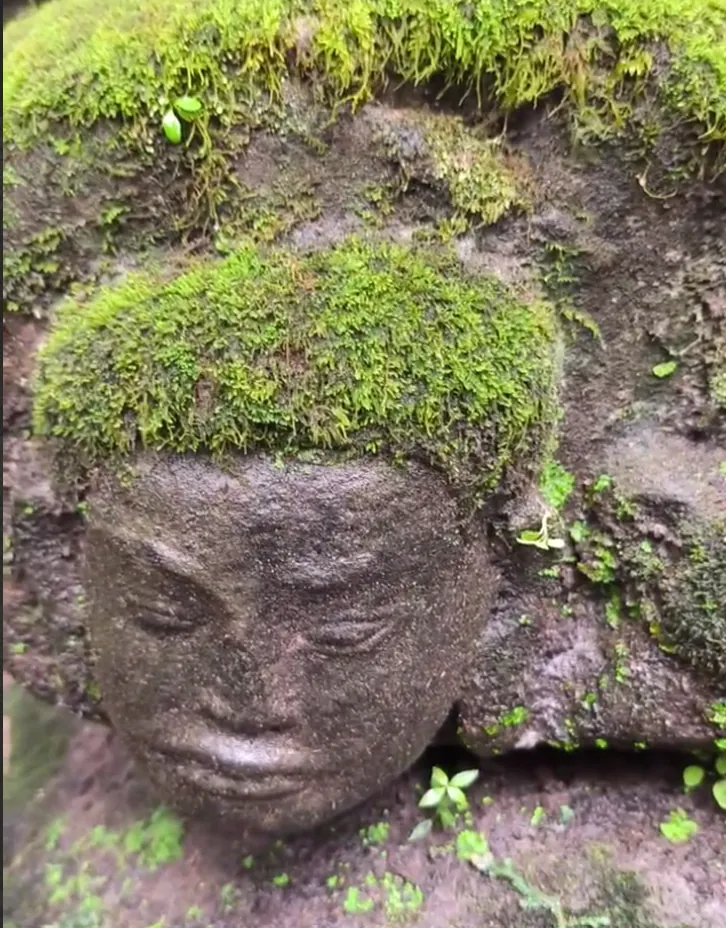
What you get in return is worth a lot. This is when the rice goes in, so the countryside on the ride out to the temples is bright green paddy in every direction. The temples change too. Moss creeps over the old stone, and on a statue in Angkor Thom it grows right across the top of the head, so the face looks like it has sprouted a little green hair. You only see it in the green months.
The greenest stretch is early July through September. September is the wettest month on the calendar, so that is the one to go in with a loose plan and a poncho.
One trick I use, since you cannot control the sky: if it has been moody and grey the whole day, tomorrow's sunrise probably will not be much. If instead there was one hard, heavy downpour in the afternoon, the clouds have dumped their load and the next morning usually clears up. Not a guarantee. But it is how I read a wet-season sky when someone is set on sunrise.
The hot season, March to May: plan around the middle of the day
Now the honest downside season. From March the heat climbs, and April is the peak, often pushing 40°C.
The heat wears people down much faster. Guests who would happily wander for hours in December are looking for shade and a cold drink by mid-morning in April. So the move is to plan the day around the sun rather than fight it.
Some temples give you cover. Angkor Wat and Ta Prohm have trees and enough enclosed stone to duck inside and stay out of the worst of it, so they hold up fine in the middle of the day. The Bayon is the opposite. Little shade, and the best part, the terrace of faces, is a climb up onto open stone with the sun full on you. In April that climb is punishing. Save the Bayon for early morning and do the shaded temples when the day peaks.
The reason not to write off hot season entirely: the sunrises and sunsets are the best of the year. The air is dry and the skies are clear, so it is almost a sure thing that the light will be good. If you care most about that one perfect morning at Angkor Wat, this is your season.
People also ask about the equinox, when the sun lines up and rises directly over the central tower of Angkor Wat. It is a nice thing to see if you happen to be here for it. I would not build a trip around it, though. The sunrise is lovely on plenty of ordinary mornings. Catch the equinox if the dates line up, and do not feel you missed something if they do not.
The cool season, November to February: the "peak" that is not really peak
These are the easy months. Mild and dry, comfortable from morning to night. This is what the guidebooks mean by best time, and for pure weather they are right.
The word "peak" scares people into picturing shoulder-to-shoulder crowds. It is not like that here. Angkor's visitor numbers are still far below where they sat before the pandemic, so what "busy" means in Siem Reap is a few more people around, not a scrum. It stays manageable.
The one place you will feel it is Angkor Wat at sunrise. The reflection ponds get a proper crowd even in a quiet year, because everyone wants the same shot. But walk a bit deeper into the park, past the first temple everyone stops at, and the numbers fall away to about what you would find on any normal day. This is exactly why a guide who knows the rhythm runs your morning backwards, starting where the crowd is not.
And prices hold steady. Businesses here are glad to have any visitors right now, so nobody is jacking up rates for the season. If one place tries it, there is always another down the road.
A word on Khmer New Year (mid-April)
Khmer New Year, around the 14th to 16th of April, gets sold as a reason to time your trip. I am honest with people about this one. It is not foreign tourists who fill the place then, it is Cambodians from other provinces coming to visit Angkor and celebrate. So the temples get busy, but with a domestic holiday crowd rather than a travel crowd. If soaking up local festival energy sounds good to you, come for it. If you were hoping for quiet temples, this is the fortnight to avoid. It sits in the peak of the heat, too.
Month by month, quickly
| Season | Months | The weather | My take |
|---|---|---|---|
| Cool & dry | Nov to Feb | Mild, dry, clear. The easy months. | Best weather, most reliable sunrise. The safe pick. |
| Hot & dry | Mar to May | Hot, climbing to ~40°C in April. | Plan around midday heat, but the light is the best all year. |
| Early wet | Jun to Jul | Warm, humid, first rains, turning green. | My favourite window. Quiet, green, not yet too wet. |
| Full wet | Aug to Oct | Warmest water, greenest land, September wettest. | Come for the green and the moss, pack a poncho. |
So when should you actually come?
If you want the simple answer, November to February and you cannot go wrong.
If you are asking me, May and June, at the seam where the heat breaks and the rains bring everything back to green, with almost nobody around. But I meant what I said at the top. Whatever dates you already have, they will work. Pick your season, and let us build the days around it.
When you are ready, meet your guide and we will sort the timing, the pass and the route so your mornings land where the light and the quiet are. If your heart is set on that one clear sunrise, start with the Private Sunrise Tour, and if you are still working out how long to stay, here is how many days Siem Reap really needs.